
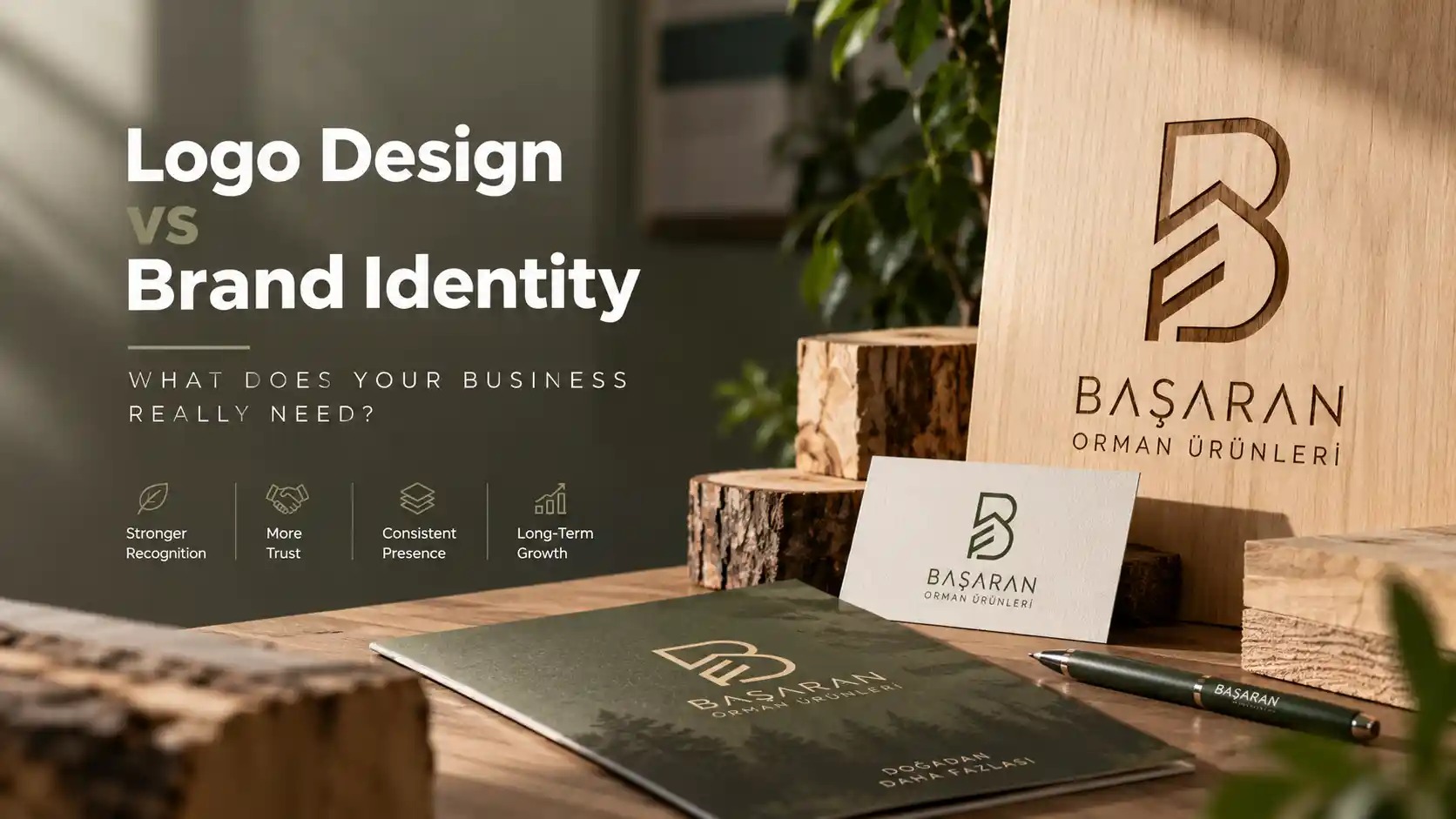
When starting a new business or developing an existing one, one of the first questions is often: Do I need a logo, or do I need a complete brand identity?
A logo is important, but it is only one part of how people recognize and remember your business. A strong brand identity creates a complete and consistent visual system that helps your company look professional across every platform.
What Is Logo Design?
A logo is the main visual symbol of your business.
It can include a symbol, typography, initials, or a combination of these elements. Its purpose is to make the brand recognizable and give customers a visual reference they can associate with the company.
A good logo should be:
- Simple
- Easy to recognize
- Flexible across different sizes
- Relevant to the business
- Suitable for digital and printed applications
However, having a professional logo does not automatically mean that your business has a complete visual identity.
What Is a Brand Identity?
Brand identity is the complete visual system surrounding the logo.
It defines how your business should look across social media, websites, advertising, printed materials, packaging, signage, uniforms, presentations, and other customer touchpoints.
A visual identity can include:
- Logo and logo variations
- Brand colors
- Typography
- Graphic elements
- Image and photography direction
- Social media design style
- Business cards and stationery
- Signage
- Packaging
- Brand guidelines
All these elements work together to create a consistent image for the company.
Why Is Consistency Important?
Imagine seeing one company using different colors, fonts, and design styles every time you interact with it.
Even if the individual designs look good, the brand may become difficult to recognize.
A consistent visual identity helps customers connect different pieces of content with the same company.
Over time, this consistency can make a brand easier to remember and create a more professional impression.
A Logo Is the Starting Point, Not the Final Result
For many businesses, designing the logo is only the first step.
The next question should be:
How will this logo work in the real world?
For example, a construction company may need its logo to work on helmets, project signage, vehicles, documents, uniforms, and social media.
A furniture or wood products company may need the identity to work on packaging, catalogs, product photography, signage, websites, and promotional materials.
Thinking about these applications during the design process helps create a brand identity that is practical, not only visually attractive.
When Is a Logo Enough?
A simple logo may be enough if you are:
- Testing a new business idea
- Starting a small personal project
- Creating an early-stage brand
- Working with a very limited number of platforms
However, once a company starts growing, advertising, publishing content, or communicating with a larger audience, having a complete visual system becomes much more useful.
When Do You Need a Full Brand Identity?
A full brand identity is particularly valuable when your business:
- Is launching professionally
- Wants to build a stronger market presence
- Uses multiple social media platforms
- Runs digital advertising campaigns
- Has a website
- Uses printed materials
- Needs signage or packaging
- Works with different designers or marketing teams
- Wants to appear more consistent and established
The goal is to make sure that wherever a customer sees your business, they immediately recognize the same brand.
Brand Identity Is More Than Decoration
Visual identity is not simply about choosing attractive colors and fonts.
Every design decision should support the way a company wants to be perceived.
A brand that wants to communicate trust may use a different visual language from a brand focused on energy and entertainment.
A company working with natural materials may use different colors, textures, and visual elements from a technology company.
This is why the design process should begin by understanding the company, its audience, its market, and its positioning.
Building a Brand That Can Grow
One of the biggest advantages of creating a proper brand identity is scalability.
When the visual system is clearly defined, creating new materials becomes easier.
A new social media post, website page, catalog, advertisement, presentation, or sign can follow the same system without starting the design process from zero every time.
This saves time and helps maintain a consistent brand image as the business grows.
Logo Design or Brand Identity?
The answer depends on what your business needs today.
If you only need a recognizable symbol, a professional logo may be enough.
If you want to build a consistent and professional presence across multiple platforms, a complete visual identity is usually the better approach.
The logo represents the brand.
The visual identity gives that logo a complete system in which to live.
Final Thoughts
A strong business needs more than a good-looking logo.
It needs a visual system that communicates clearly, stays consistent, and works across different applications.
Whether you are launching a new company or refreshing an existing brand, thinking beyond the logo can help create a more recognizable, professional, and consistent presence.
A successful visual identity should not only look good today. It should also be flexible enough to support the business as it grows.