
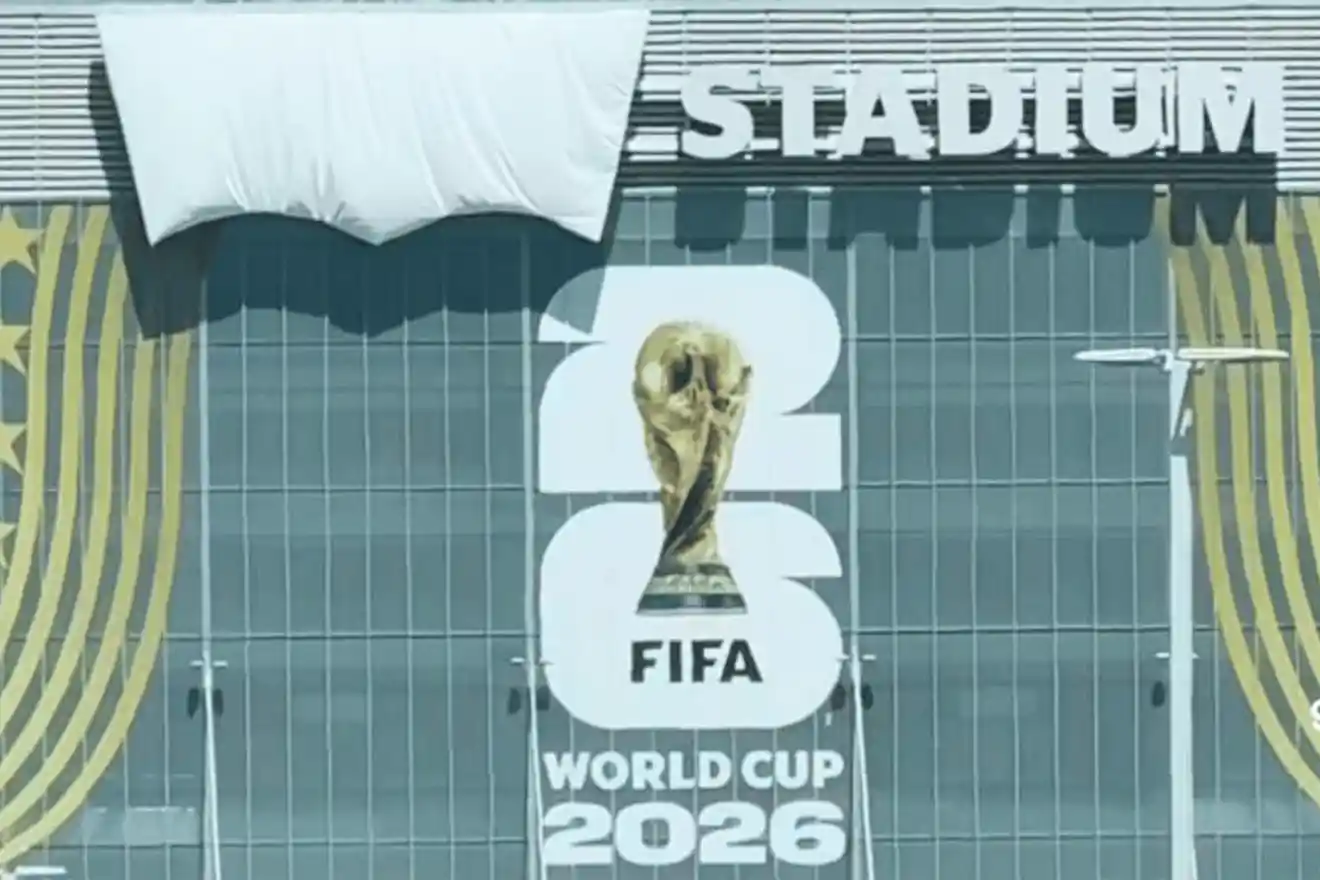
In marketing, not every restriction is a loss. Sometimes, a limitation becomes the perfect stage for creativity. That is exactly what happened with Levi’s during the World Cup, when the brand had to cover its logo at Levi’s Stadium because of FIFA’s sponsorship and brand protection rules.
Officially, the situation was simple. During major tournaments like the World Cup, FIFA protects the rights of its official sponsors by limiting the visibility of non-sponsor brands inside and around stadiums. As a result, commercial stadium names are often replaced with neutral names during the tournament. Levi’s Stadium, for example, appears under the neutral name San Francisco Bay Area Stadium.
But what turned this from a standard regulation into a powerful marketing moment was the way Levi’s responded.
The brand could have disappeared completely. The logo could have become just another blank white space. But instead, the name was covered while the iconic red shape remained recognizable enough for people to identify it immediately.
That is where real brand power begins.
Levi’s did not need to say its name. It did not need the logo to be fully visible. The color, the shape, and the visual memory did the work. The audience completed the image in their own minds. And that is the essence of brand equity: when a small visual cue is enough to activate the entire brand in people’s memory.
The marketing intelligence behind this moment was not only in covering the logo. It was in turning the cover itself into a message. FIFA wanted to reduce the brand’s visibility, but Levi’s managed to make the absence of the name even more noticeable. What could have looked like a loss became proof of how strong the brand identity really is.
More importantly, Levi’s did not react defensively. The brand did not frame the situation as being “banned” or “hidden.” Instead, it treated the restriction as a creative opportunity and extended the idea to social media by using the covered logo concept. It was almost as if the brand was saying: even when we do not write our name, you still know who we are.
That is true brand flexibility.
A flexible brand does not depend on one fixed version of its logo. It does not collapse when the name is removed, the color is adjusted, or the context changes. A flexible brand can adapt to limitations, environments, and cultural moments while still remaining instantly recognizable.
Weak brands need constant explanation. They need the full name, the full logo, the slogan, the campaign, and repeated exposure to be understood. Strong brands need much less. Sometimes a color is enough. Sometimes a shape is enough. Sometimes even a blank space is enough.
The Levi’s case offers an important lesson for every company, creator, and business owner: do not build your brand around a logo only. Build it around a complete visual system. A distinctive color, a memorable shape, a consistent tone of voice, a clear style, and a repeated emotional experience.
Because a logo can be covered.
A name can be removed.
An ad can be restricted.
But a strong identity stays in the mind.
This is the difference between having a logo and having a brand.
A logo is a visual element.
A brand is a memory.
Levi’s did not win because it broke the rules. It won because it understood the game. The brand respected the restriction, but used the flexibility of its identity to its advantage. It did not shout its name. It let people remember it on their own.
And that is smarter than any direct advertisement.
In the end, what happened with Levi’s was not just a viral social media moment. It was a real lesson in modern marketing: when a brand is strong enough, even covering it can become a campaign.
FIFA covered the logo.
But Levi’s won the attention.